What is sustainability?
Sustainability is the ability to meet needs and support well-being over time without undermining the natural systems, resources and social conditions that future generations will also depend on. It asks how people can live well today while keeping essential options open for people in the future.
The idea is broader than recycling or buying products with environmental labels. It includes how energy is produced, how food is grown, how water is managed, how cities are designed, how work and services are organised, and whether the benefits and costs of development are shared fairly.
The idea of sustainable development
The 1987 Brundtland Report helped establish a widely used definition of sustainable development: meeting the needs of the present without compromising the ability of future generations to meet their own needs. The definition has two important parts. First, essential needs deserve attention, especially where people lack food, safe water, housing, healthcare or education. Second, decisions must recognise limits created by ecosystems, resources, technology and social organisation.
This means sustainability is not simply about reducing consumption everywhere by the same amount. It also means improving access to essential services while reducing wasteful or damaging patterns of production and resource use.
Three connected dimensions
Environmental sustainability
This dimension considers the condition of ecosystems and the resources that support life. It includes climate, biodiversity, soils, forests, freshwater, oceans, air quality and pollution. Environmental sustainability aims to keep natural systems functioning and avoid using renewable resources faster than they can recover.
Social sustainability
Social sustainability concerns people and communities. It includes health, education, safety, human rights, inclusion, cultural identity, decent work and access to essential services. A policy may reduce pollution but still be unfair if it places costs on people who have few alternatives or excludes them from decisions.
Economic sustainability
Economic sustainability asks whether livelihoods, businesses, public services and infrastructure can remain viable over time. It considers long-term costs, resilience, resource efficiency, employment and investment. Economic activity is more durable when it does not depend on exhausting the natural or social foundations that make it possible.
The three dimensions are connected rather than separate boxes. A clean-water project, for example, has environmental effects, health benefits, operating costs and implications for access and affordability.
Key principles of sustainability
- Think long term: consider how a decision affects people and ecosystems over years and generations, not only its immediate benefits.
- Use resources efficiently: reduce avoidable energy, water and material use, and extend the life of useful products.
- Protect natural systems: maintain habitats, soils, watersheds and biodiversity that support life and livelihoods.
- Consider fairness: ask who receives the benefits, who bears the costs and whether affected people can participate in decisions.
- Understand connections: recognise that food, energy, transport, water, health and land use influence one another.
- Measure outcomes: use clear indicators and report uncertainty, trade-offs and unintended effects.
- Adapt as evidence changes: review decisions when new information, technology or local conditions become available.
What sustainability looks like in practice
Energy: efficient buildings, reliable public transport, renewable electricity where suitable, and electricity networks that can balance supply and demand can reduce resource use and emissions. The best mix depends on local conditions and affordability.
Food: sustainable food systems consider soil health, water use, biodiversity, farm livelihoods, nutrition, storage and food waste. No single farming method or diet works identically in every region.
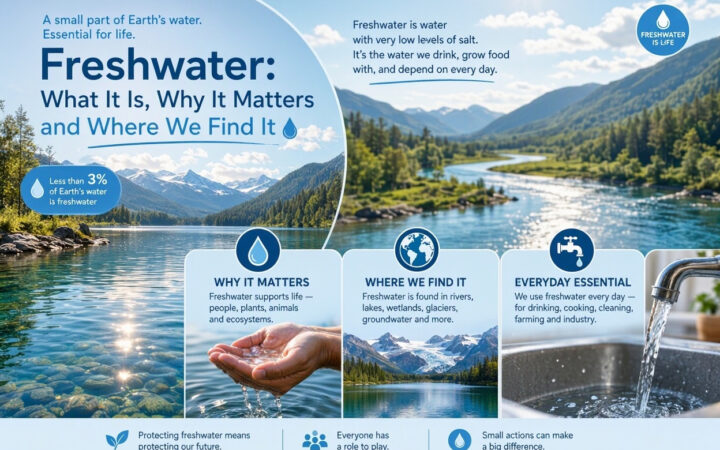
Water: protecting watersheds, reducing leaks, treating wastewater and using water efficiently can support communities and ecosystems. Reuse requires appropriate treatment and compliance with local health standards.
Materials: durable products, repair, reuse, sharing and recycling can reduce the need for new raw materials. Recycling is useful, but preventing unnecessary waste and extending product life should come first where practical.
Cities: compact planning, safe walking and cycling routes, public transport, green space, efficient buildings and resilient water systems can improve quality of life while reducing environmental pressures.
For practical examples, see our guides to sustainable living choices, sustainability developments and local sustainability approaches around the world.
How to judge whether something is sustainable
A product, project or policy should not be judged by one attractive feature. Ask what problem it solves, what resources it uses, how it affects people and ecosystems, and what happens at the end of its useful life. A product that uses less energy during operation may still have significant manufacturing impacts. A low-cost project may shift pollution or costs to another community. For a step-by-step assessment checklist, see sustainability basics: evaluating claims and decisions.
Useful assessment looks at the full life cycle, the local context and the distribution of benefits and harms. It also checks whether claims are specific and supported by evidence. Words such as green, natural or eco-friendly do not explain what was measured or compared.
Indicators can include greenhouse gas emissions, energy and water use, waste generation, habitat condition, air and water quality, access to services, health outcomes, employment quality and affordability. The right indicators depend on the decision being evaluated.
Common misunderstandings
Sustainability means doing without everything
Not necessarily. It is about meeting needs in ways that reduce avoidable harm and preserve future options. Better services, efficient infrastructure and durable products can improve quality of life while using resources more carefully.
One person can solve sustainability problems alone
Individual choices matter, but many outcomes depend on infrastructure, public policy, business decisions and collective action. People need realistic options before they can choose them.
Recycling makes any product sustainable
No. Recycling can recover materials, but it does not automatically cancel impacts from extraction, manufacturing, transport or use. Repair, reuse and waste prevention are also important.
There is one universal sustainability formula
No. Broad principles can guide decisions, but practical solutions differ with climate, ecosystems, technology, culture, income, laws and local needs.
How sustainability connects with environmental problems
Sustainability is a framework for responding to linked challenges such as climate change, pollution, habitat loss, water stress and resource depletion. Addressing one issue can affect others, so planning should consider the whole system. Our overview of environmental problems and their solutions introduces several of these connections, while the guide to climate change explains one major global challenge.
Frequently asked questions
What is the simplest definition of sustainability?
Sustainability means meeting present needs while protecting the natural and social foundations that future generations will need to meet their own needs.
What are the three pillars of sustainability?
A common framework describes environmental, social and economic dimensions. They are connected and should be considered together.
Why is sustainability important?
It helps people and institutions make decisions that support well-being over time, reduce environmental damage, use resources responsibly and consider fairness between communities and generations.
Is sustainable development the same as sustainability?
The terms are closely related. Sustainability describes the broader goal or condition, while sustainable development refers to ways of improving human well-being while protecting the systems and opportunities needed in the future.