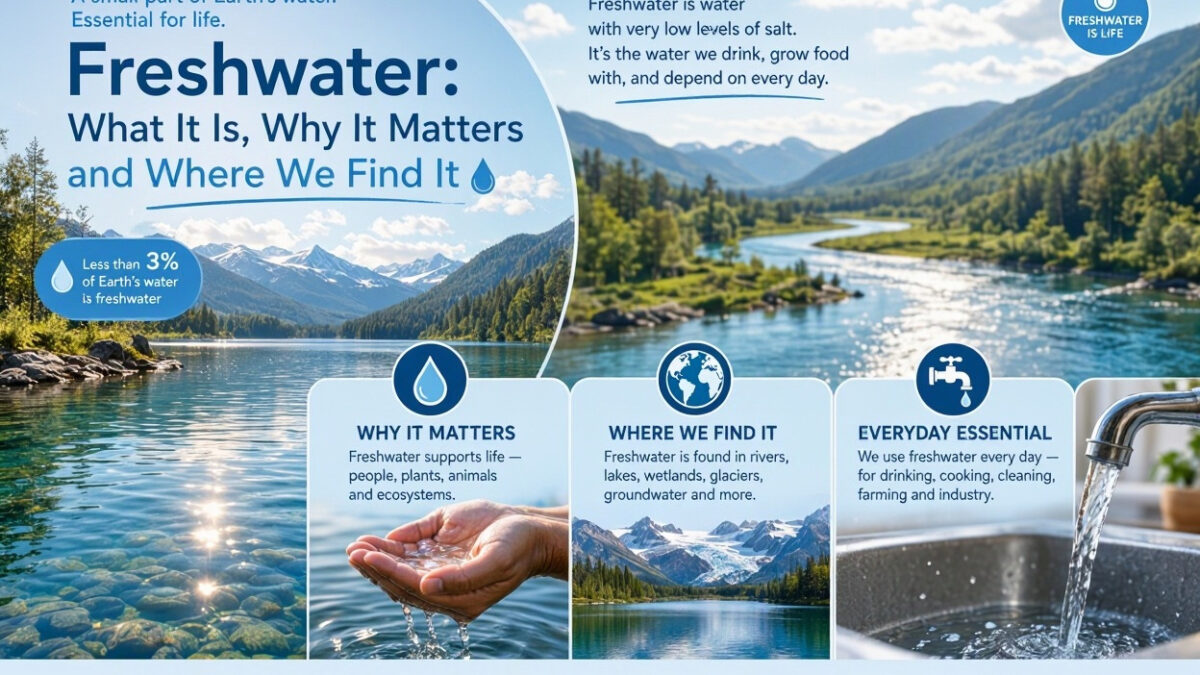
Freshwater is water with a very low concentration of dissolved salts. It is found in rivers, lakes, wetlands, glaciers, groundwater, soil and the atmosphere. Although freshwater makes up only a small share of Earth’s total water, it supports people, agriculture, wildlife, ecosystems and many economic activities.
Freshwater is not evenly distributed. Some regions have large rivers and reliable rainfall, while others depend heavily on groundwater or seasonal water sources. Understanding where freshwater comes from, how it moves and why it is under pressure helps explain many environmental and social challenges.
What Is Freshwater?
Freshwater is water that contains far less dissolved salt than seawater. It includes liquid water in rivers and lakes, water stored underground, frozen water in glaciers and ice sheets, and moisture moving through the atmosphere and soil.
Freshwater is part of the water cycle. Water evaporates from oceans, land and other surfaces, forms clouds, falls as precipitation, and then moves through streams, soils, groundwater systems and living organisms before returning to larger bodies of water.
Where Is Freshwater Found?
Rivers and streams
Rivers and streams carry freshwater across landscapes. They receive water from rainfall, melting snow, groundwater and smaller tributaries. River systems connect upland areas with lakes, wetlands, estuaries and coastal environments.
Lakes and ponds
Lakes store freshwater for periods ranging from months to thousands of years. They support fish, aquatic plants, birds and other organisms and can also provide drinking water, irrigation and recreation.
Groundwater
Groundwater is stored in spaces and fractures below the surface. Wells can bring this water to the surface for homes, farms and industry. Some groundwater moves slowly and may take years or much longer to recharge, so pumping can become a serious problem when withdrawals exceed replenishment.
Glaciers and snow
Ice and seasonal snow store large amounts of freshwater. In mountain regions, melting snow and glaciers can contribute to river flow. Changes in snowpack and long-term ice loss can therefore affect water supplies downstream.
Wetlands and soils
Wetlands hold water in landscapes and provide habitat for plants and animals. Soil also stores water that plants can use and that may eventually enter streams or groundwater systems.
Why Freshwater Matters
Drinking and sanitation
Safe freshwater is essential for drinking, cooking and hygiene. Reliable access to clean water also supports sanitation and helps communities reduce exposure to waterborne disease.
Food production
Agriculture depends on rainfall, rivers, reservoirs and groundwater. Irrigation can make food production possible in dry areas, but excessive withdrawals can reduce rivers and groundwater reserves. Efficient irrigation and better water management can help balance food production with long-term availability.
Healthy ecosystems
Freshwater ecosystems are home to fish, amphibians, insects, plants, birds and microorganisms. Rivers, lakes and wetlands also provide services such as nutrient cycling, flood storage and habitat for species that cannot survive in saltwater environments.
Industry and energy
Many industries use water for processing, cleaning and cooling. Some forms of energy production also depend on water. Responsible management is important because industrial demand can compete with household needs and ecosystem requirements.
The Freshwater Cycle
Freshwater constantly moves between the atmosphere, land, surface water, groundwater and living organisms. The key terms behind these connections are explained in our guide to freshwater concepts. Solar energy drives evaporation, while gravity moves water through precipitation, runoff and groundwater flow.
Vegetation is part of this cycle. Plants take up water through their roots and release water vapour through transpiration. Soil, forests and wetlands can influence how quickly rainfall becomes runoff and how much water enters the ground.
The water cycle means that freshwater is renewable in many places, but renewable does not mean unlimited. A water source can be depleted when people remove water faster than natural processes replace it.
Major Threats to Freshwater
Pollution
Freshwater can be polluted by sewage, industrial chemicals, excess nutrients, plastics, sediment and other contaminants. Pollution can harm wildlife and make water more expensive or difficult to treat for human use.
Overuse and groundwater depletion
When withdrawals exceed recharge, groundwater levels can fall. Rivers and lakes can also shrink when too much water is diverted for agriculture, cities or industry. Long-term management requires understanding both natural supply and human demand.
Habitat loss
Dams, drainage, channel modification and development can change freshwater habitats. Removing wetlands or vegetation along rivers can reduce habitat quality and alter natural water flows.
Climate change
Climate change can alter rainfall, snowpack, evaporation, drought risk and flooding. The effects differ by region, but changing water patterns can make planning more difficult for communities, farms and ecosystems.
How Freshwater Can Be Protected
Use water efficiently
Fixing leaks, improving irrigation, choosing efficient appliances and reducing unnecessary water use can lower demand. Large savings can also come from repairing distribution systems and improving industrial water efficiency.
Protect watersheds
A watershed is an area of land that drains toward a common river, lake or other body of water. Protecting forests, wetlands, soils and riverbanks can improve water quality and reduce erosion and runoff.
Reduce pollution at the source
Preventing pollution is generally more effective than trying to remove contaminants after they enter a water system. Better wastewater treatment, responsible fertilizer use, industrial controls and careful waste management can reduce pollution loads.
Restore wetlands and rivers
Restoration can reconnect waterways with floodplains, recover wetland habitat and improve ecological function. Projects need to account for local hydrology, land use and community needs rather than applying one solution everywhere.
Freshwater and Everyday Life
People interact with freshwater every day through drinking, food, sanitation, energy, manufacturing and recreation. Even products that do not visibly contain water can require water during farming or manufacturing.
This connection means that freshwater conservation is not only an environmental issue. It is also linked to public health, food security, infrastructure, economic planning and community resilience.
Frequently Asked Questions
Is all freshwater safe to drink?
No. Freshwater can contain microorganisms, chemicals, sediments or other contaminants. Water must be assessed and treated appropriately before it is considered safe for drinking.
Is groundwater always underground in large lakes?
No. Groundwater occupies pores and fractures beneath the land surface. It can move slowly through aquifers and may discharge into springs, rivers, lakes or coastal areas.
Can freshwater run out?
A local freshwater source can become depleted or effectively unavailable when demand exceeds replenishment, pollution makes water unusable, or infrastructure cannot deliver it. Sustainable management aims to keep withdrawals and quality within long-term limits.
How can individuals help protect freshwater?
People can reduce unnecessary water use, prevent pollutants from entering drains and waterways, maintain vehicles and household systems responsibly, support watershed protection and learn about local water issues.
Freshwater and the Wider Environment
Freshwater protection is closely connected with broader environmental challenges. Pollution, habitat loss, changing climate conditions and resource use can affect water systems at the same time. Our guide to environmental problems and solutions provides a wider overview, while our climate change guide explains the climate connection in more detail.
Conclusion
Freshwater is a limited and unevenly distributed resource that supports people and ecosystems. Rivers, lakes, groundwater, wetlands, snow and ice all play different roles in the water cycle. Protecting these sources requires efficient use, pollution prevention, watershed conservation and long-term planning. Understanding freshwater is an important first step toward making better decisions about one of Earth’s most essential resources.