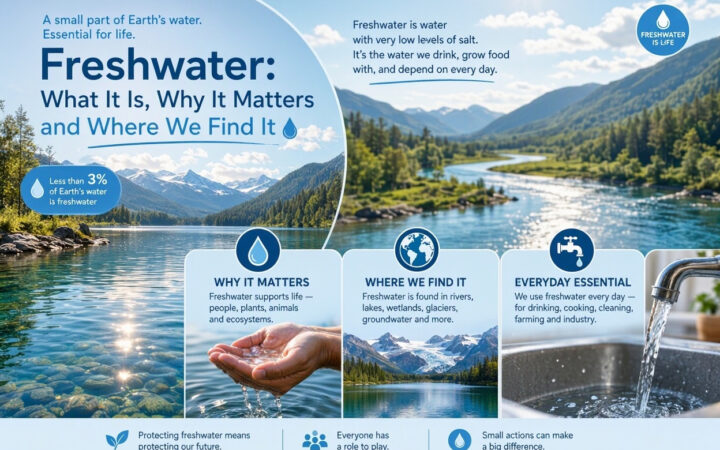
Freshwater conservation is not only about using less water at home. Rivers, lakes, wetlands and aquifers are connected to farms, businesses, roads, forests and towns. Actions that protect water quality and allow natural systems to function can benefit drinking-water supplies, wildlife and communities downstream.
The most useful measures depend on the local water source and the main pressures affecting it. A dry region may need careful allocation and drought planning, while a rapidly growing town may need better stormwater management, wastewater treatment or protection of its drinking-water catchment.
1. Understand the local water source first
Before choosing a conservation measure, find out where local water comes from and how it is treated. A community may rely on a river, reservoir, lake, groundwater well, desalination plant or a combination of sources. Learn whether the main concern is seasonal shortage, declining groundwater, pollution, leaking infrastructure, flood risk or damage to wetlands.
Water decisions are connected across a watershed. What happens on farms, roads and building sites can affect streams and reservoirs farther downstream. The U.S. Environmental Protection Agency’s source-water protection guidance describes how communities can assess local threats and choose suitable measures.
2. Reduce avoidable household water use
Households can begin with practical checks: repair leaks, use efficient fixtures where appropriate, run washing machines with suitable full loads, and avoid leaving taps running unnecessarily. Water-efficient appliances and plumbing can help, but the best options depend on local water pressure, building design and the availability of replacement parts.
Outdoor use can be important in some climates. Water gardens during cooler parts of the day where local advice supports it, choose plants suited to local rainfall, use mulch to reduce evaporation and adjust irrigation to actual soil moisture. Do not assume that rainwater collection or greywater reuse is permitted or suitable everywhere; local rules and health safeguards matter.
3. Keep pollutants out of drains and waterways
Stormwater often travels over roofs, roads, driveways and construction sites before reaching streams or lakes. Along the way it can pick up sediment, litter, oils, chemicals and nutrients. Preventing pollution at the source is usually more effective than trying to remove it after it has entered a waterway.
- Store fuels, paints, solvents and garden chemicals securely and dispose of them through approved local services.
- Follow local instructions for medicines, batteries, oils and household hazardous waste rather than pouring them into drains.
- Use fertilisers and pesticides only when needed and according to local guidance.
- Pick up pet waste and keep leaves, soil and loose materials out of storm drains.
- Control erosion on bare soil and construction sites with suitable barriers and ground cover.
The EPA explains how runoff from urban areas and construction sites can carry pollutants into streams, lakes and groundwater in its guide to urbanisation and stormwater runoff.
4. Protect riverside vegetation and wetlands
Vegetated strips beside streams and rivers can slow runoff, trap some sediment and provide habitat. Wetlands store water, support wildlife and can help maintain water quality and flow conditions. Protecting existing wetlands and river margins is often more reliable than trying to recreate them after they have been filled or heavily altered.
Restoration should use species and methods suited to the site. Planting trees in the wrong location, blocking natural water movement or changing a wetland without understanding its hydrology can cause harm. Local ecologists and water managers can help identify the right approach.
5. Improve irrigation and soil management on farms
Agriculture uses water in ways that vary by crop, soil, climate and season. Farmers can assess irrigation schedules, maintain pipes and pumps, monitor soil moisture and use application methods suited to the field. Drip or other targeted irrigation may be useful for some crops and settings, but it is not automatically the best option for every farm.
Healthy soils can help store water and reduce erosion. Practices may include maintaining ground cover, adding organic matter where appropriate, managing grazing, protecting stream margins and matching fertiliser application to crop needs. These measures can also reduce nutrient and sediment losses into rivers and lakes.
6. Help businesses and public services manage water
Businesses can begin with a water audit that identifies where water enters, where it is used and where it leaves the site. Leak detection, process changes, cooling-system improvements, reuse and suitable treatment may reduce withdrawals. Facilities should check water quality requirements and ensure that reused water is appropriate for its intended purpose.
Public services also matter. Utilities can monitor distribution losses, maintain pipes, protect source areas and improve wastewater treatment. Town planners can include permeable surfaces, rain gardens, detention areas and safe drainage routes when designing streets and new developments.
7. Prepare for droughts and changing rainfall
Water planning should account for both dry and wet extremes. Drought plans can set priorities for essential uses, identify backup supplies, communicate restrictions and protect vulnerable households. Flood planning can preserve natural floodplains where possible and prevent development from increasing risk downstream.
Groundwater should be managed with care because some aquifers recharge slowly. Pumping limits, monitoring wells, protection of recharge areas and appropriate reuse of treated water can help prevent long-term depletion. The freshwater scarcity guide explains why demand, infrastructure and water availability need to be considered together.
8. Support community catchment action
Local groups can help monitor litter, report pollution, restore suitable streamside habitat and share information about water conservation. Community science can contribute useful observations, but results should be collected with consistent methods and should not be treated as a substitute for accredited drinking-water testing or official monitoring.
Catchment partnerships work best when residents, farmers, businesses, utilities, researchers and public authorities share information and agree on priorities. Clear responsibilities and long-term maintenance are important; a one-day clean-up cannot solve a continuing pollution source.
How to choose the right action
- Identify the local water source and the main pressure affecting it.
- Choose a measure that addresses that pressure rather than relying on a generic water-saving slogan.
- Check local regulations, health requirements and environmental conditions.
- Set a simple baseline, such as water use, leak reports, water-quality readings or habitat condition.
- Review results over time and adjust the measure if it does not work as expected.
Frequently asked questions
Is saving water at home enough to protect a river?
Household efficiency can help, but river health also depends on land use, wastewater, agriculture, industry, stormwater, water withdrawals and habitat protection across the watershed.
Do wetlands always improve water quality?
Wetlands can retain sediment and transform or store some pollutants, but their performance depends on the type of wetland, pollutant, hydrology and condition. They are not a substitute for preventing contamination at its source.
Can rainwater be used for drinking?
That depends on local rules, collection materials, storage and treatment. Untreated rainwater can contain contaminants, so it should not be assumed safe for drinking.
Conclusion
Freshwater conservation combines efficient use with protection of the landscapes and infrastructure that keep water clean and available. Homes, farms, businesses and communities can all contribute, but measures should match local conditions and be checked for results. For the science behind these actions, read freshwater concepts explained, freshwater basics and water pollution prevention.